Air Fryer Electricity Cost: Save 50% Compared to Your Oven
Short answer for Air Fryer Electricity Cost: Save 50% Compared to Your Oven: how long it takes, what it should look like when it’s done, and what to do with the leftovers.
Use the visual cue, not only the clock: every oven and every pan runs a little differently. Freezer instructions included, with the thawing time.
-
Kitchen Tongs Guide: 5 Reasons Why You Need Them for Air Frying
Kitchen tongs are essential for air fryer safety, protecting your hands from 400°F heat wh… -
Master the Garlic Press: 3 Tips for Perfect Low-Carb Flavor
A high-quality Garlic Press turns a tedious 5-minute task into a 30-second job. Using this… -
Microplane Zester Grater: 5 Reasons It Saves You 10 Minutes Daily
A sharp Microplane Zester Grater is the secret to elevating low-carb dishes. By extracting… -
Measuring Cups and Spoons: 5 Essential Tips for Perfect Baking
Precision is the secret to perfect low-carb baking where even a 5% error in almond flour v…
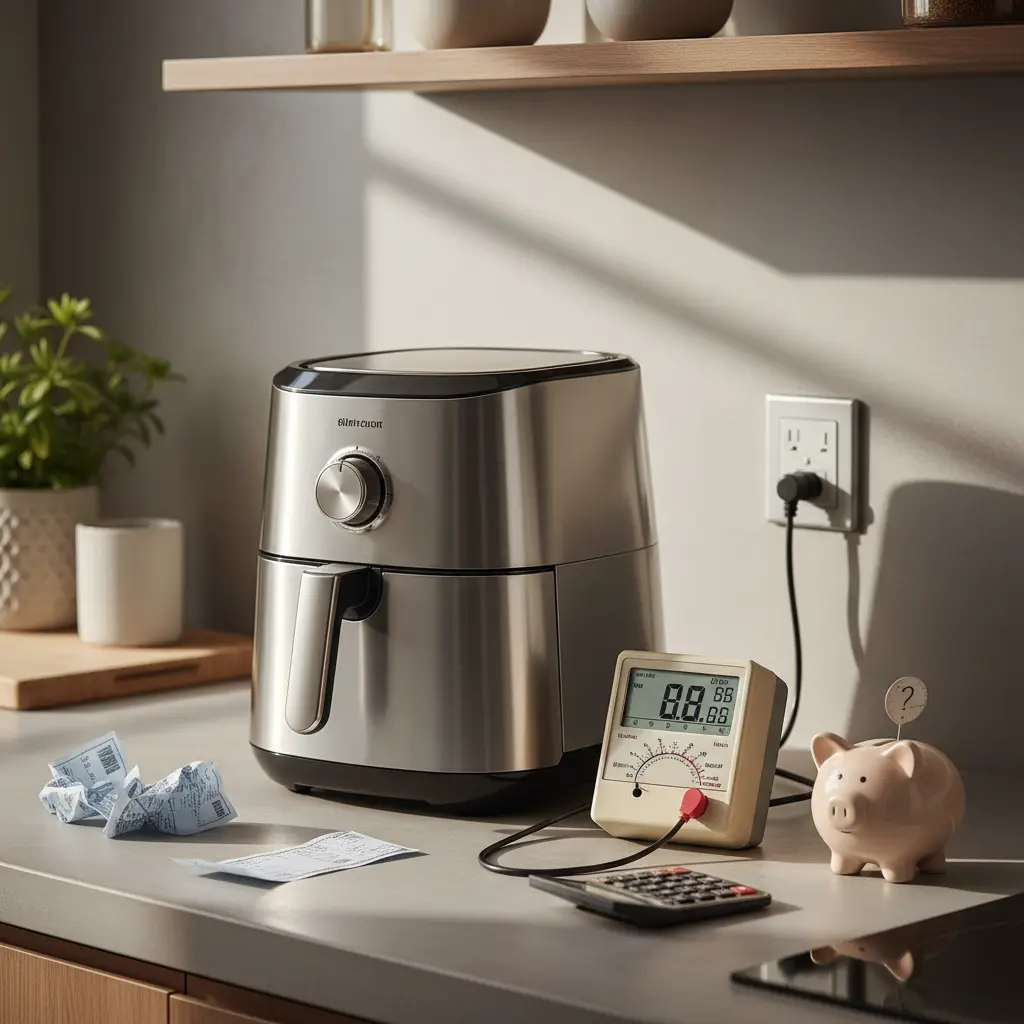
Using an air fryer can cut your cooking energy usage by 50% compared to a conventional oven. By switching from a 3,000-watt full-sized oven to a 1,500-watt air fryer for a 15-minute meal, you save money and keep the kitchen cool.
The 15-Minute Efficiency Flow: in practice
Breaking Down the Math
Most air fryers use between 1,200 and 1,700 watts. If your electricity rate is $0.15 per kWh, a 30-minute session costs roughly $0.09.
Compare this to a standard oven which can draw 3,000 to 5,000 watts. The constant cycling of a large oven heating element wastes significant energy.
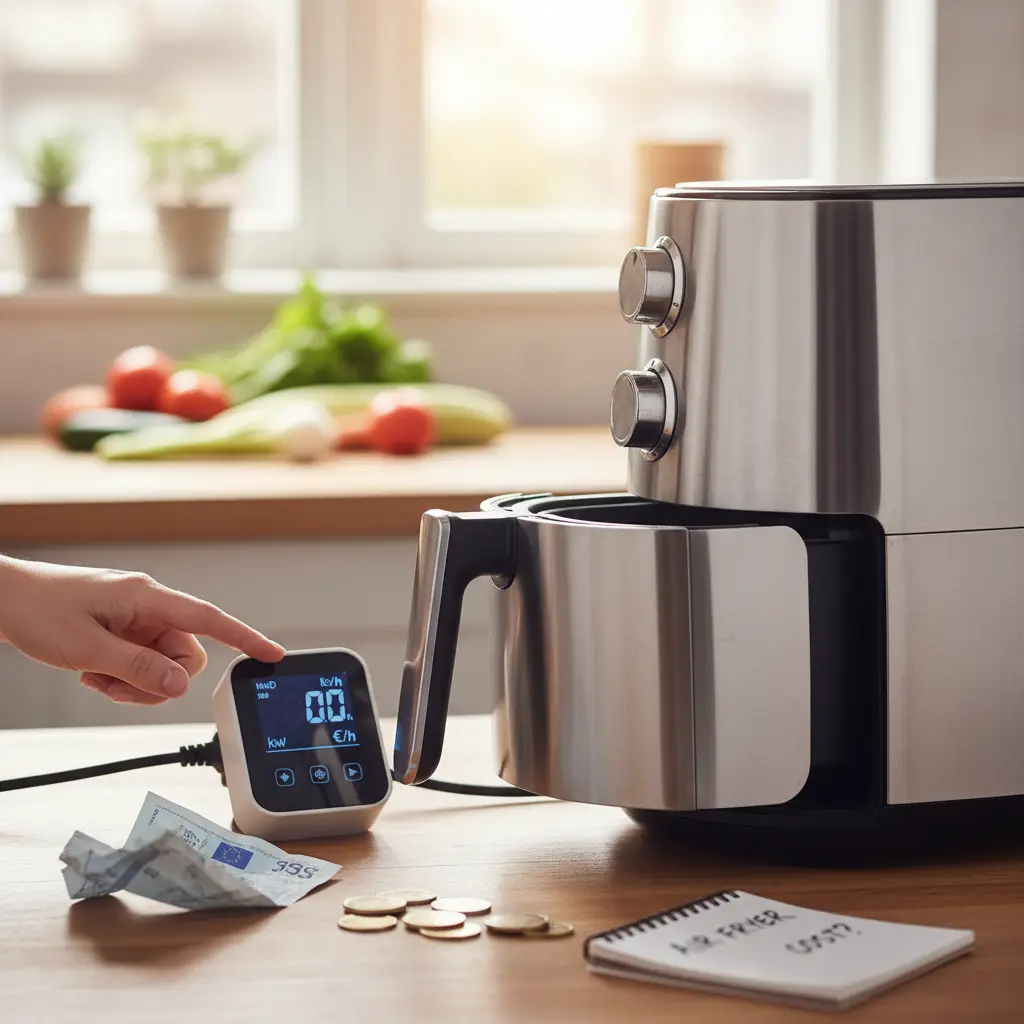
- Use an energy monitor plug to track exact usage.
- Calculate your local rate via your utility bill.
- Notice the 30% reduction in peak-hour demand.
Low-Carb Cooking Habits
Low-carb meals often rely on high-heat roasting for texture. Air fryers deliver this superior crispness without heating up the entire house.
You can roast 2 lbs of cauliflower or broccoli in 15 minutes at 400°F. This is much faster than the 40 minutes required for standard roasting.
- Single-layer cooking ensures even heat distribution.
- Use avocado oil to prevent smoking at 400°F.
- Shake the basket every 5 minutes for consistency.
Maximizing Energy Savings
Efficiency isn't just about the machine size. It is about how you pack the basket and how often you open it during the cooking cycle.
Opening the drawer causes a 15-degree temperature drop. Every time you peek, the unit works harder to recover the lost heat.
- Keep the unit 6 inches away from walls.
- Clean the heating element every 30 days.
- Avoid using foil unless absolutely necessary.
Pros and honest limits
- Drastic reduction in energy costs
- Kitchen stays cool in summer
- Faster cook times for keto staples
- Limited basket capacity
- Requires constant cleaning
- Higher energy usage than microwaves
Common Appliance Myths
Many believe air fryers are always cheaper than microwaves. While microwaves are better for reheating, air fryers win on texture for keto recipes.
The small footprint allows for faster air circulation. This physics-based advantage is why you get results in 12 minutes rather than 30.
- Microwaves consume less power for liquids.
- Air fryers outperform ovens on frozen keto foods.
- Small batches save the most electricity.
Practical comparison
| Appliance | Avg Power (W) | 15 min Cost |
|---|---|---|
| Air Fryer | 1500 | $0.06 |
| Electric Oven | 3000 | $0.12 |
| Toaster Oven | 1200 | $0.05 |
| Gas Oven | N/A | $0.04 |
Frequently asked questions
Does the air fryer use more electricity than an oven?
No, it uses significantly less. Because of the smaller cavity and powerful fan, it reaches temperature faster and retains heat better.
How much does it cost to run for an hour?
At a standard rate of $0.15 per kWh, running a 1,500-watt air fryer for one hour costs roughly $0.23.
Should I unplug it when not in use?
Yes, if your model has a digital display. Vampire power draw can add up over 365 days.
Is it worth it for a single person?
Absolutely. You avoid the waste of heating a large cavity meant for a family-sized meal.
Conclusion
Switching to air frying is a simple way to trim your monthly utility costs while keeping your low-carb diet on track. Start by tracking your cook times for one week to see the difference. If you found these tips helpful, share this guide with a friend who is trying to save money in the kitchen.
Related reading
---
As an Amazon Associate, I earn from qualifying purchases. Some links in this post may generate a commission at no extra cost to you.
Read next
How to tell it is done (without opening and poking every minute)
- A clean toothpick is for cake; for a moist batter you want damp crumbs, never wet batter.
- The centre should spring back under light pressure — if it dips, give it 5–8 more minutes.
- A strong smell in the kitchen means almost done. It is the most underrated and most accurate cue.
- Home ovens run up to 35 °F off: a cheap oven thermometer fixes more problems than any recipe tweak.
- Do not open the door for the first two thirds of the bake — that temperature drop is what sinks it.
The 5 mistakes that ruin this recipe — and the fix for each
- Cold ingredients. Cold eggs and dairy curdle the batter. Twenty minutes at room temperature fixes it.
- Overmixing after the flour. It builds gluten and turns the crumb rubbery. Mix only until the flour disappears.
- Wrong pan. Batter that sits too deep bakes outside and stays raw inside. Use the conversion table below.
- Opening the oven early. That sudden temperature drop is the classic cause of a sunken centre.
- Slicing hot. The structure is still setting; 15 minutes of rest changes every slice.
Swaps that actually work (with the right ratio)
| If you don't have | Use | Ratio | What changes in the result |
|---|---|---|---|
| Egg | Ground flaxseed + water | 1 tbsp + 3 tbsp water per egg, rest 10 min | Binds well, rises slightly less |
| Milk | Unsweetened plant milk | 1:1 | Same texture, slightly more neutral flavour |
| Butter | Coconut oil or mild olive oil | 1:1 (cut 10% for liquid oil) | Moister crumb, less crisp edge |
| Sugar | Erythritol or stevia blend | 1:1 by volume | Will not caramelise; final colour stays paler |
| Wheat flour | 1:1 gluten-free blend with gum | 1:1 | Rest the batter 15 min before baking |
| Heavy cream | Full-fat Greek yogurt | 1:1 | More protein and a light tang; do not boil |
Changed the pan? Adjust the time like this
| Original pan | Equivalent | Time adjustment | Watch out for |
|---|---|---|---|
| 8" round | 8×8" square | Same time | Square corners bake faster |
| 9" round | 9×13" pan | −5 to −8 min | Thinner batter, check early |
| Loaf pan | 6 jumbo muffin cups | −15 to −20 min | Cupcakes bake far faster |
| Deep casserole | Two shallow dishes | −10 min | Spreads the heat and prevents a raw centre |
Store, freeze and reheat without wrecking the texture
| Where | How long | How to store | How to bring it back |
|---|---|---|---|
| Counter | 2 days | Airtight box, cut side down | Oven at 300 °F for 6 min |
| Fridge | 5 days | Wrap each slice in film | Microwave 15 s or oven 300 °F for 8 min |
| Freezer | 3 months | Slices separated by parchment | Thaw wrapped to keep the moisture in |
Frequently asked questions
Can I make Air Fryer Electricity Cost: Save 50% Compared to Your Oven ahead?
Yes. Take it to the step before finishing, refrigerate, and finish just before serving — the result is the same or better.
Can I double the recipe?
Yes. Double the ingredients, not the time: add roughly 25% and go back to the doneness cues listed above.
What is the real yield per serving?
Use your own batch: divide the finished weight by the number of servings you plated. Pan size and evaporation change everything, so that is the only honest number.
Does it work on any oven or stove?
Yes, but equipment varies by up to 35 °F. Judge by the doneness cues, not the clock, and note your own timing.
How well do leftovers keep?
Very well, following the storage table above. Freeze in flat portions: they thaw evenly and hold their texture.