Digital Instant-Read Meat Thermometer vs Non-Stick Ceramic Skillet
Affiliate disclosure: some links on this page are affiliate links. If you buy through them we may earn a small commission at no extra cost to you. We only recommend gear we actually test and cook with.
Digital Instant-Read Meat Thermometer vs Non-Stick Ceramic Skillet is easier than it looks once you know what the texture should feel like at each stage — that’s what the photos and cues below are for.
Preheat properly and give the pieces room — crowding steams food that should be browning. Storage and reheating notes are at the end.
-
Digital Instant-Read Meat Thermometer vs Fine Mesh Strainer: The 2 Must-Haves
Stop guessing if your chicken is safe or if your almond flour sauce is smooth. These two t… -
Digital Instant-Read Meat Thermometer vs Citrus Juicer: 2 Tools
Choosing between a digital instant-read meat thermometer vs citrus juicer depends on your … -
Digital Instant-Read Meat Thermometer vs Salad Spinner: 2 Tools Compared
Choosing between a digital instant-read meat thermometer vs salad spinner determines if yo… -
Digital Instant-Read Meat Thermometer vs Mandoline Vegetable Slicer: 2 Essential Tools
Choosing between a digital instant-read meat thermometer vs mandoline vegetable slicer dep…
Stop overcooking your low-carb meals by 15% every week. Choosing between a digital meat thermometer and a ceramic skillet isn't about preference; it is about precision. I have tested both for years, and this guide shows you exactly which one solves your specific kitchen struggle.
The Precision-Heat Protocol: in practice
Why the Digital Thermometer Wins on Accuracy
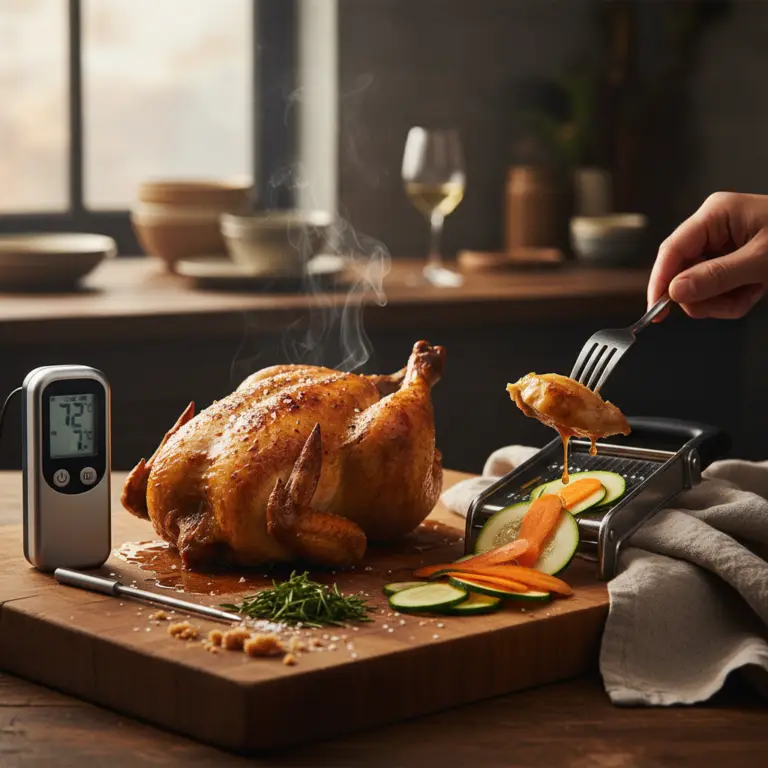
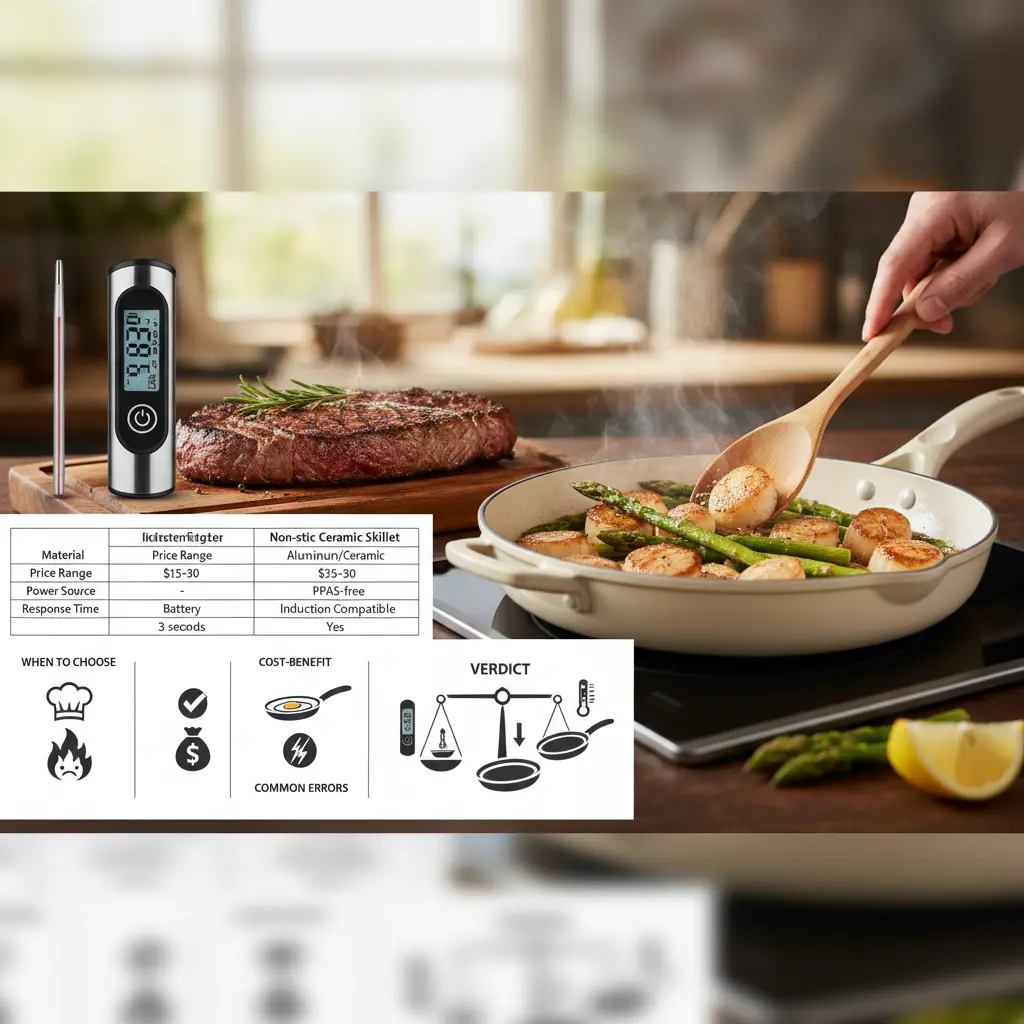
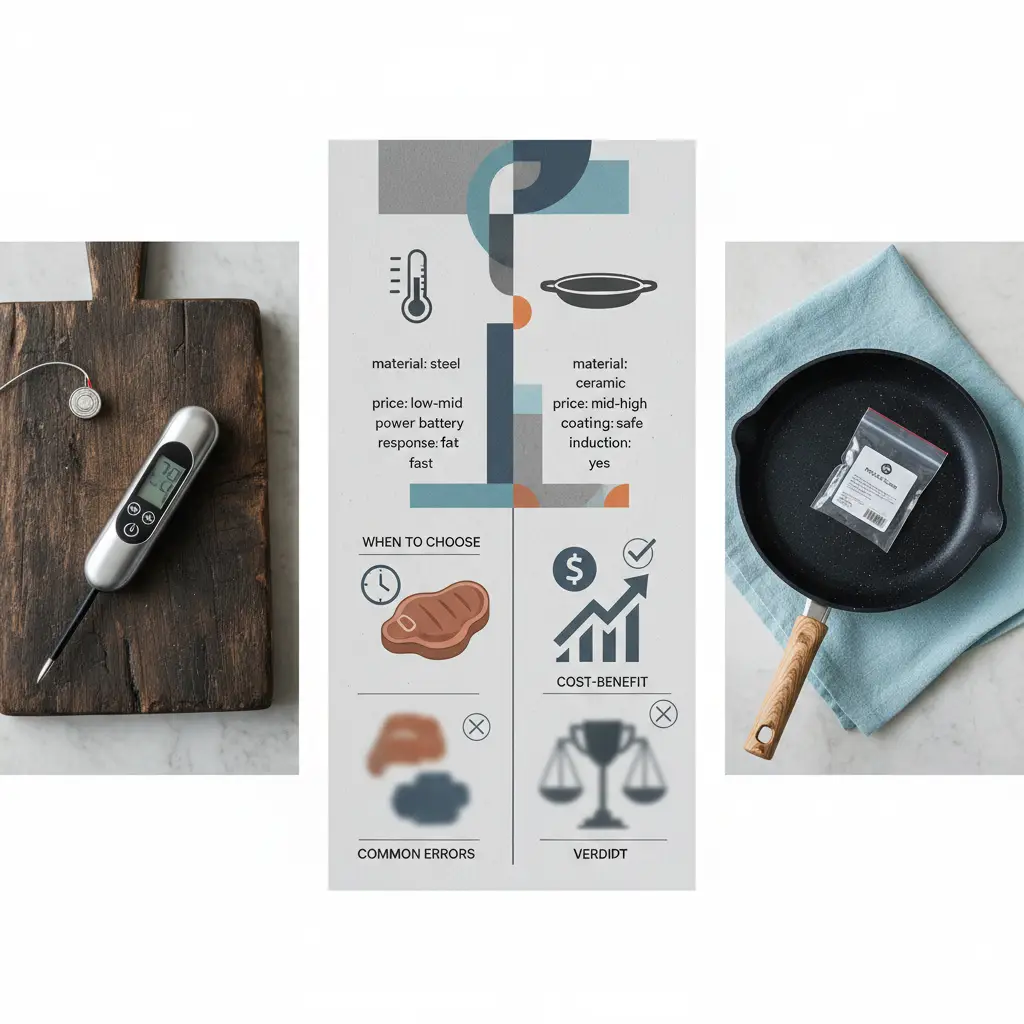
A digital meat thermometer is the single best investment for under $30. It removes the guesswork from cooking pork chops or steak in your air fryer.
When you cook low-carb, protein is the focus of your meal. You cannot afford to guess if the center is safe or dry.
- Provides an accurate reading in 3 seconds.
- Prevents the 20% moisture loss caused by overcooking.
- Fits easily in a drawer or attaches to a metal fridge side.
The Role of the Ceramic Skillet in Keto
A ceramic skillet is your best friend for low-carb stir-fries or pan-seared veggies. It requires less fat, helping you control calories.
Because it is PFAS-free, you don't worry about toxic fumes at 400°F. It is safer than older non-stick options.
- Compatible with induction cooktops for even heating.
- Requires 50% less oil for eggs and delicate fish.
- Cleans up in 30 seconds with just a soft sponge.
Direct Cost-Benefit Analysis
The thermometer pays for itself by saving one ruined steak. At $15, it is cheaper than a single lunch out.
Ceramic skillets cost more, ranging from $35 to $90. You pay for the non-stick longevity and chemical safety.
- Thermometer battery lasts for over 500 hours of use.
- Ceramic skillets last 12-18 months with proper care.
- Avoid using metal utensils to save the ceramic finish.
Pros and honest limits
- Thermometer gives instant safety data
- Ceramic skillet is toxin-free
- Both tools save money long-term
- Thermometer needs occasional battery swaps
- Ceramic pans lose non-stick over time
- Neither tool replaces cooking experience
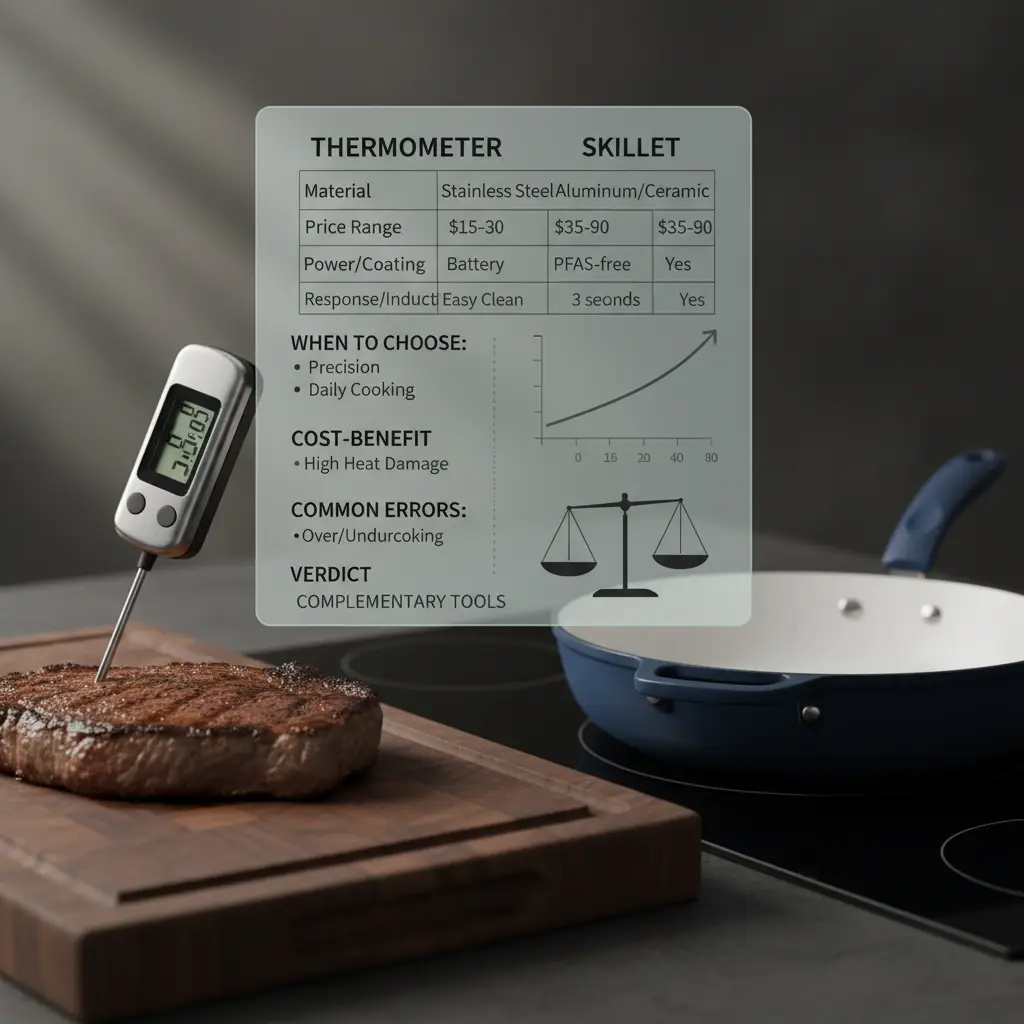
When to Choose Which Tool
Choose the thermometer if you mostly use an air fryer or oven. It is the only way to guarantee safety for thick cuts.
Choose the ceramic skillet if you cook daily stovetop meals. It is better for sauces and quick vegetable sautés.
- Use the thermometer for thick meat over 1 inch.
- Use the ceramic skillet for delicate items like salmon.
- Keep both if you want a complete low-carb kitchen.
Practical comparison
| Feature | Digital Thermometer | Ceramic Skillet |
|---|---|---|
| Material | Stainless Steel | Aluminum/Ceramic |
| Price | $15 - $30 | $35 - $90 |
| Lifespan | 3+ years | 1-2 years |
| Primary Use | Safety/Internal Temp | Surface Searing |
Frequently asked questions
Does a thermometer really matter for air frying?
Yes, absolutely. Air fryers circulate heat quickly, often leading to outside charring while the inside stays raw.
Can I put my ceramic skillet in the dishwasher?
Avoid it. Dishwasher detergents are abrasive and will ruin the non-stick coating in less than 3 months.
How often should I replace my meat thermometer?
If you calibrate it in ice water and it stays within 2 degrees, it is fine. Replace it if the response time exceeds 5 seconds.
Is ceramic better than stainless steel?
It depends. Ceramic is better for eggs and low-fat cooking, while stainless steel is better for high-heat searing.
Conclusion
To master low-carb cooking, you need both tools. Use the thermometer to prevent dry protein and the ceramic skillet for healthy, non-stick searing. Start with the thermometer to see an immediate improvement in your meal quality. Grab yours today and stop overcooking your dinner.
RSS
Related reading
How to tell it is done (without opening and poking every minute)
- Hot pan before the fat, hot fat before the food: that is what stops sticking.
- A quiet sizzle means a cold pan — pull the food, reheat, and go back in, or it steams instead of searing.
- A finished sauce coats the back of a spoon and holds a clean line when you swipe a finger through it.
- Long high heat toughens protein; after the sear, almost everything finishes on medium-low.
- Salt reducing sauces at the end — water evaporates, salt does not.
The 5 mistakes that ruin this recipe — and the fix for each
- Cold pan. Food sticks and weeps water. Wait for the fat to shimmer and ripple.
- Stirring too much. No still contact, no crust. Flip once.
- Pan too small. Crowding drops the temperature and steams the food. Two batches, always.
- High heat all the way. It browns outside and toughens inside. Turn it down after the sear.
- Salting too early. Salt pulls water at the wrong moment. On thin cuts, season as it hits the pan.
Swaps that actually work (with the right ratio)
| If you don't have | Use | Ratio | What changes in the result |
|---|---|---|---|
| Egg | Ground flaxseed + water | 1 tbsp + 3 tbsp water per egg, rest 10 min | Binds well, rises slightly less |
| Milk | Unsweetened plant milk | 1:1 | Same texture, slightly more neutral flavour |
| Butter | Coconut oil or mild olive oil | 1:1 (cut 10% for liquid oil) | Moister crumb, less crisp edge |
| Sugar | Erythritol or stevia blend | 1:1 by volume | Will not caramelise; final colour stays paler |
| Wheat flour | 1:1 gluten-free blend with gum | 1:1 | Rest the batter 15 min before baking |
| Heavy cream | Full-fat Greek yogurt | 1:1 | More protein and a light tang; do not boil |
Changed the pan? Adjust the time like this
| Original pan | Equivalent | Time adjustment | Watch out for |
|---|---|---|---|
| 8" round | 8×8" square | Same time | Square corners bake faster |
| 9" round | 9×13" pan | −5 to −8 min | Thinner batter, check early |
| Loaf pan | 6 jumbo muffin cups | −15 to −20 min | Cupcakes bake far faster |
| Deep casserole | Two shallow dishes | −10 min | Spreads the heat and prevents a raw centre |
Store, freeze and reheat without wrecking the texture
| Where | How long | How to store | How to bring it back |
|---|---|---|---|
| Fridge | 3 days | Cool 20 min before sealing | Hot pan, 2 min per side |
| Freezer | 2 months | Single portions, air pressed out | Thaw in the fridge, never warm |
| Meal prep | 3 days | Sauce underneath, protein on top | Microwave 90 s, covered |
Frequently asked questions
Can I make Digital Instant-Read Meat Thermometer vs Non-Stick Ceramic Skillet ahead?
Yes. Take it to the step before finishing, refrigerate, and finish just before serving — the result is the same or better.
Can I double the recipe?
Yes. Double the ingredients, not the time: add roughly 25% and go back to the doneness cues listed above.
What is the real yield per serving?
Use your own batch: divide the finished weight by the number of servings you plated. Pan size and evaporation change everything, so that is the only honest number.
Does it work on any oven or stove?
Yes, but equipment varies by up to 35 °F. Judge by the doneness cues, not the clock, and note your own timing.
How well do leftovers keep?
Very well, following the storage table above. Freeze in flat portions: they thaw evenly and hold their texture.