Digital Instant-Read Meat Thermometer vs Fine Mesh Strainer: The 2 Must-Haves
Affiliate disclosure: some links on this page are affiliate links. If you buy through them we may earn a small commission at no extra cost to you. We only recommend gear we actually test and cook with.
-
Digital Instant-Read Meat Thermometer vs Citrus Juicer: 2 Tools
Choosing between a digital instant-read meat thermometer vs citrus juicer depends on your … -
Digital Instant-Read Meat Thermometer vs Non-Stick Ceramic Skillet
Stop overcooking your low-carb meals by 15% every week. Choosing between a digital meat th… -
Digital Instant-Read Meat Thermometer vs Salad Spinner: 2 Tools Compared
Choosing between a digital instant-read meat thermometer vs salad spinner determines if yo… -
Digital Instant-Read Meat Thermometer vs Mandoline Vegetable Slicer: 2 Essential Tools
Choosing between a digital instant-read meat thermometer vs mandoline vegetable slicer dep…
Stop guessing if your chicken is safe or if your almond flour sauce is smooth. These two tools will save you 15 minutes of frustration every single week in a low-carb kitchen.
The Prep-Check Method: in practice
Why the Digital Meat Thermometer Wins
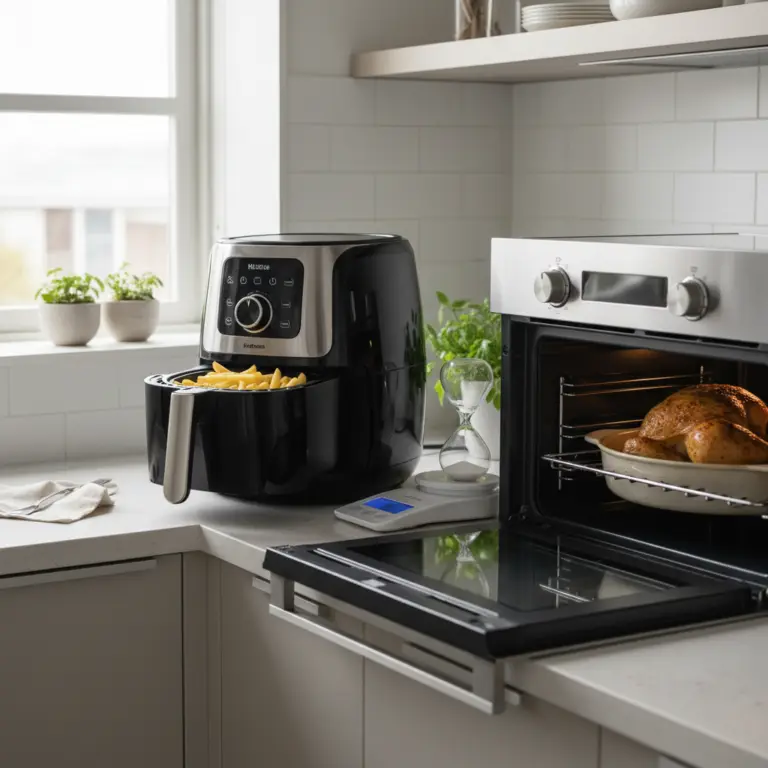
If you cook in an air fryer, you need a thermometer. Air fryers fluctuate in temperature, making visual checks unreliable for thick cuts of meat.
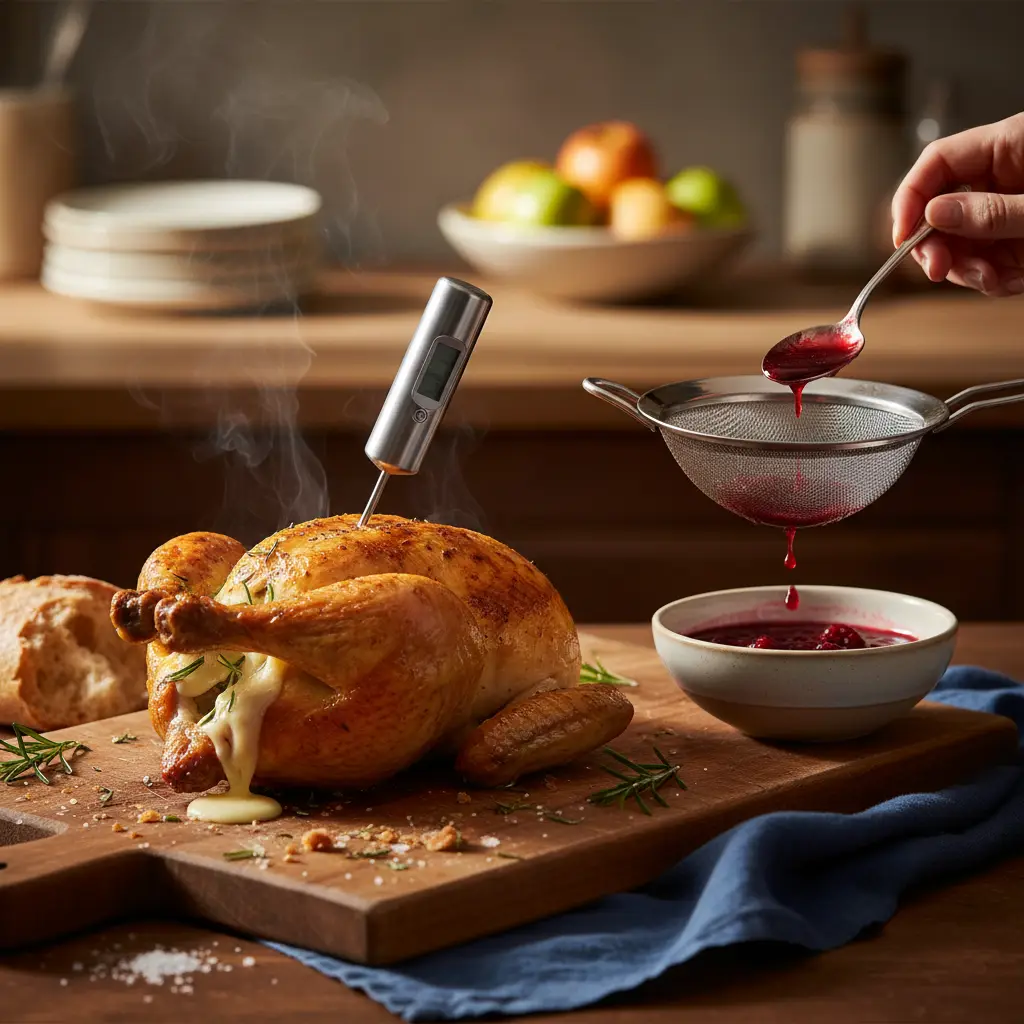
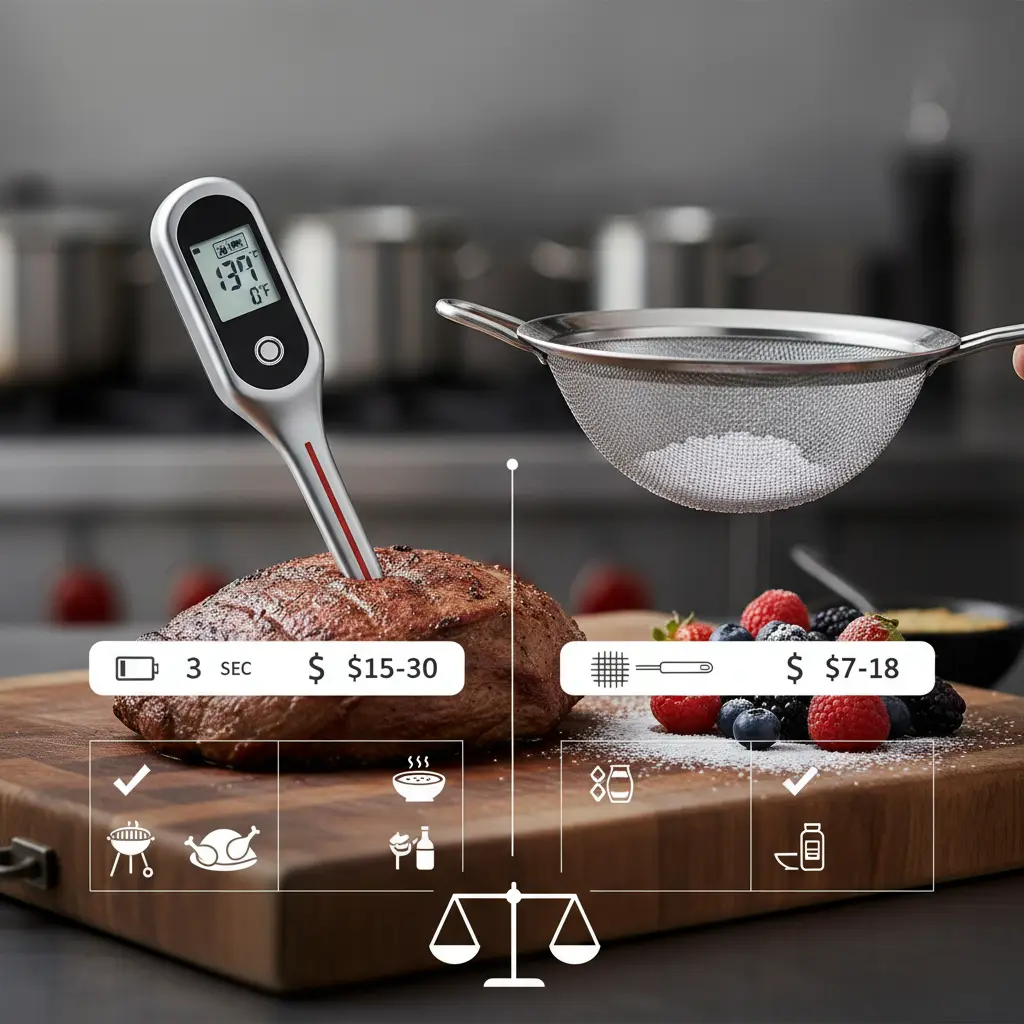
A thermometer provides an accurate reading in 3 seconds. It prevents the tragedy of dry, overcooked chicken breast.
- Saves expensive proteins from being ruined.
- Ensures you hit the safe 165°F mark every time.
- Fits easily in a drawer next to your air fryer.
The Role of the Fine Mesh Strainer
A fine mesh strainer is essential for smooth low-carb sauces and silky egg-based custards. It removes fibers from almond flour that can ruin the mouthfeel.
It is also great for washing berries quickly. Its long handle makes it easy to hold over a bowl while you shake out excess liquid.
- Filters out lumps in dry keto baking mixes.
- Strains lumps out of heavy cream-based sauces.
- Easy to clean with just 10 seconds of hot water.
Comparing Cost and Durability
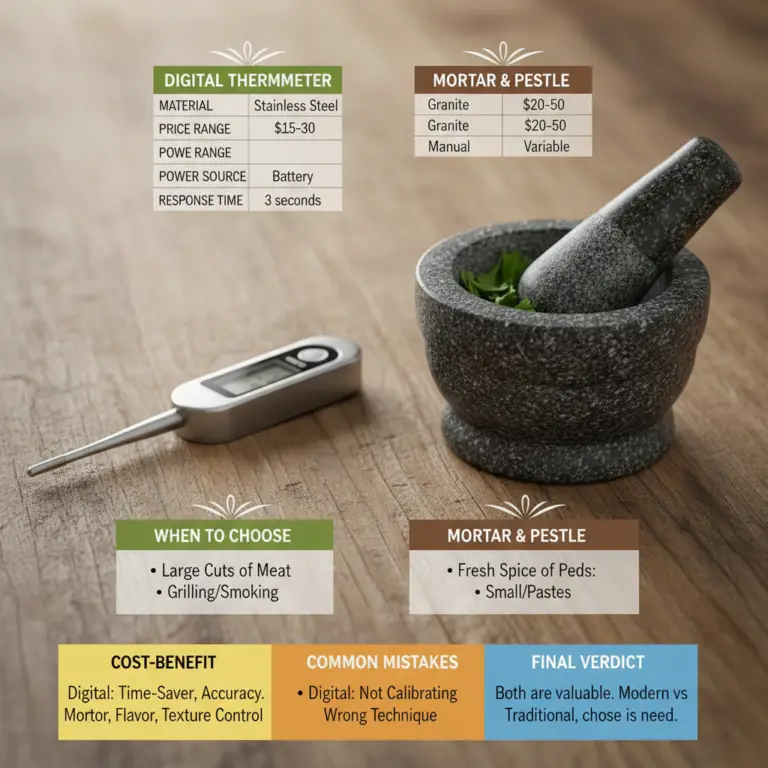
The thermometer is a higher investment, typically costing $15-$30. However, it is an electronic precision tool that requires a battery.
The strainer is a low-cost workhorse, usually $7-$18. It lasts for years because it has no moving parts to break.
- Thermometers offer digital speed but require battery swaps.
- Stainless steel mesh strainers are dishwasher safe.
- Both tools pay for themselves by reducing food waste.
Pros and honest limits
- Thermometer: Instant reading in 3 seconds
- Strainer: Removes grit from keto flours
- Both: Durable stainless steel construction
- Thermometer: Needs battery replacements
- Strainer: Can be awkward to store
- Both: Not intended for heavy-duty industrial use
When to Use Which Tool
Use the thermometer when cooking proteins like pork chops, salmon, or whole chickens. It is your primary defense against foodborne illness.
Use the strainer when you are preparing sauces, sifting keto flours, or washing fresh produce for your salad.
- Reach for the thermometer for any meat over 1 inch thick.
- Use the strainer for any recipe involving almond or coconut flour.
- Keep both within arm's reach of your air fryer station.
Practical comparison
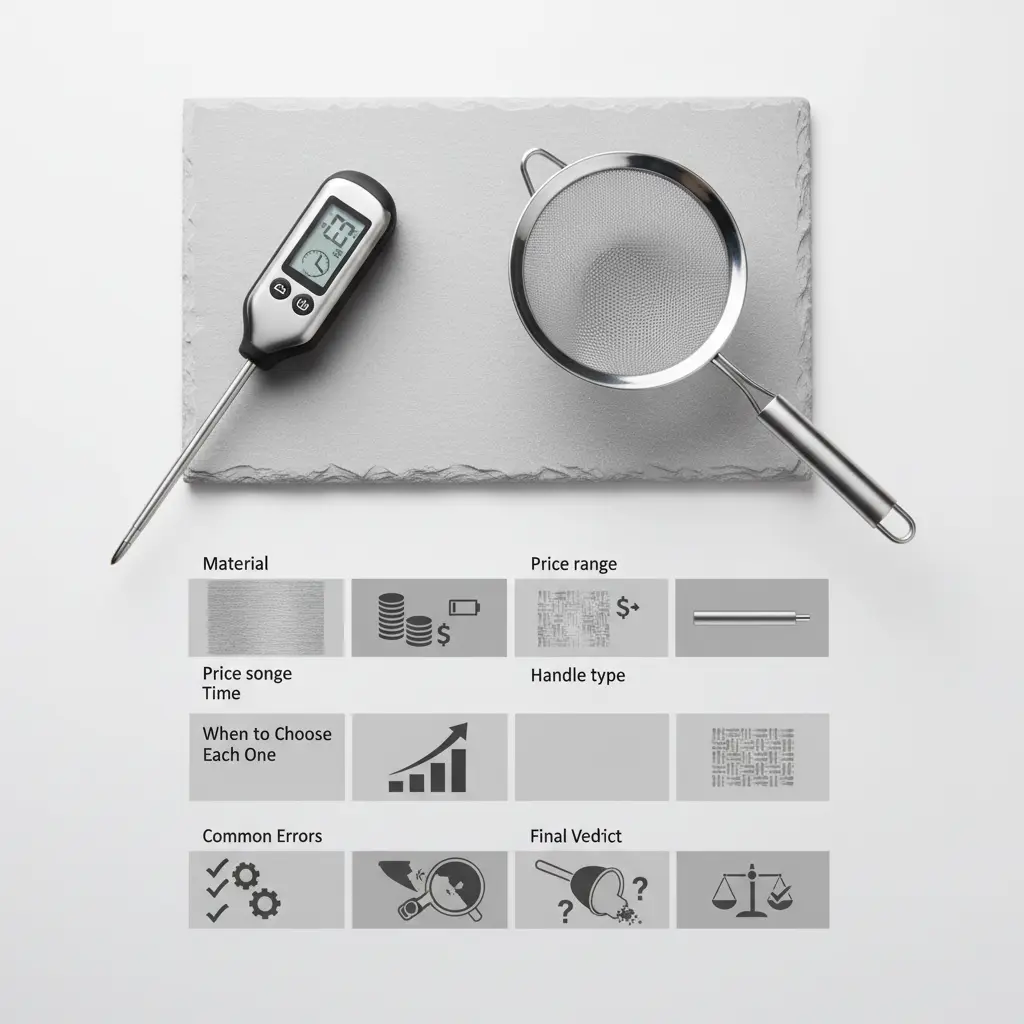
| Feature | Thermometer | Strainer |
|---|---|---|
| Material | Stainless Steel | Stainless Steel |
| Price Range | $15-$30 | $7-$18 |
| Best For | Safety/Temp | Texture/Sifting |
| Maintenance | Battery swap | Dishwasher safe |
Frequently asked questions
Do I really need a thermometer for an air fryer?
Yes, air fryers cook very fast and heat intensity varies. A thermometer is the only way to avoid overcooking your protein.
Can a strainer replace a sifter?
Absolutely. A fine mesh strainer is often better than a traditional sifter for almond flour because it catches the larger, coarse bits.
How long does the battery last in a thermometer?
With regular use, a standard battery usually lasts 6 to 12 months. Keep a spare one in your kitchen junk drawer.
Is stainless steel safe for all foods?
Yes, it is non-reactive and food-safe. It won't impart a metallic taste to your acidic sauces or citrus juices.
Conclusion
Whether you are perfecting a crispy keto chicken or a smooth almond flour cake, these tools are worth every penny. Invest in the thermometer for safety and the strainer for texture. Your home-cooked meals will reach restaurant quality in no time. Which one are you adding to your kitchen cart first?
RSS
Related reading
How to tell it is done (without opening and poking every minute)
- Edges brown before the middle: start checking 3 minutes early, always at the centre of the piece.
- Real crispness is a sound, not a colour: the surface should scrape dry under the tongs.
- 3.2–5.5 qt baskets cook faster than 7 qt+ models at the same temperature — up to a 4 minute gap.
- Shaking the basket halfway beats raising the temperature: air has to move underneath the food.
- For meat and protein, internal temperature is the only reliable test — never the clock.
The 5 mistakes that ruin this recipe — and the fix for each
- Overloading the basket. Air stops circulating and everything steams. Cook in two batches: double the time, but you get crunch.
- Skipping the preheat. Three minutes of preheat changes crust formation. Without it the surface dries before it browns.
- Wet food. Pat dry with paper towel. Surface water turns to steam, and steam blocks crust.
- Too much oil. In an air fryer, more oil means more smoke, not more crunch. A light spray is enough.
- Never cleaning the element. Baked-on grease burns and pushes a bitter taste into the next recipe.
Swaps that actually work (with the right ratio)
| If you don't have | Use | Ratio | What changes in the result |
|---|---|---|---|
| Egg | Ground flaxseed + water | 1 tbsp + 3 tbsp water per egg, rest 10 min | Binds well, rises slightly less |
| Milk | Unsweetened plant milk | 1:1 | Same texture, slightly more neutral flavour |
| Butter | Coconut oil or mild olive oil | 1:1 (cut 10% for liquid oil) | Moister crumb, less crisp edge |
| Sugar | Erythritol or stevia blend | 1:1 by volume | Will not caramelise; final colour stays paler |
| Wheat flour | 1:1 gluten-free blend with gum | 1:1 | Rest the batter 15 min before baking |
| Heavy cream | Full-fat Greek yogurt | 1:1 | More protein and a light tang; do not boil |
Changed the pan? Adjust the time like this
| Original pan | Equivalent | Time adjustment | Watch out for |
|---|---|---|---|
| 8" round | 8×8" square | Same time | Square corners bake faster |
| 9" round | 9×13" pan | −5 to −8 min | Thinner batter, check early |
| Loaf pan | 6 jumbo muffin cups | −15 to −20 min | Cupcakes bake far faster |
| Deep casserole | Two shallow dishes | −10 min | Spreads the heat and prevents a raw centre |
Store, freeze and reheat without wrecking the texture
| Where | How long | How to store | How to bring it back |
|---|---|---|---|
| Fridge | 3–4 days | Leave uncovered 10 min before sealing | Air fryer at 350 °F for 3–4 min, no oil |
| Freezer | Up to 2 months | Freeze spread out, then bag | Straight from frozen, 350 °F for 6–8 min |
| Counter | Up to 4 hours | On a rack, never in a sealed box | Trapped steam kills the crunch |
Frequently asked questions
Can I make Digital Instant-Read Meat Thermometer vs Fine Mesh Strainer: The 2 Must-Haves ahead?
Yes. Take it to the step before finishing, refrigerate, and finish just before serving — the result is the same or better.
Can I double the recipe?
Yes. Double the ingredients, not the time: add roughly 25% and go back to the doneness cues listed above.
What is the real yield per serving?
Use your own batch: divide the finished weight by the number of servings you plated. Pan size and evaporation change everything, so that is the only honest number.
Does it work in any air fryer?
Yes, but smaller baskets cook faster. Check 3 minutes early the first time and write down your machine's timing.
How well do leftovers keep?
Very well, following the storage table above. Freeze in flat portions: they thaw evenly and hold their texture.