Air Fryer Safety Plastic: 3 Rules to Avoid Melting
Air Fryer Safety Plastic: 3 Rules to Avoid Melting lives or dies on two details: the temperature and the moment you stop cooking. Both are spelled out here.
Preheat properly and give the pieces room — crowding steams food that should be browning. Storage and reheating notes are at the end.
-
Air Fryer for Beginners: Master 12-Minute Low-Carb Meals
Stop wasting 30 minutes preheating your oven for a single chicken breast. This guide helps… -
5 Best Air Fryer Accessories to Save 20 Minutes Daily
Finding the right gear turns your air fryer into a daily meal prep machine. I have tested … -
Air Fryer Basket vs Oven: 3 Ways to Save Time on Low-Carb
Choosing between an air fryer basket vs oven changes your dinner speed by 50%. After testi… -
What Can You Cook In Air Fryer? 5 Ways to Cut Carbs
Knowing what can you cook in air fryer saves 30 minutes of prep time every single night. I…
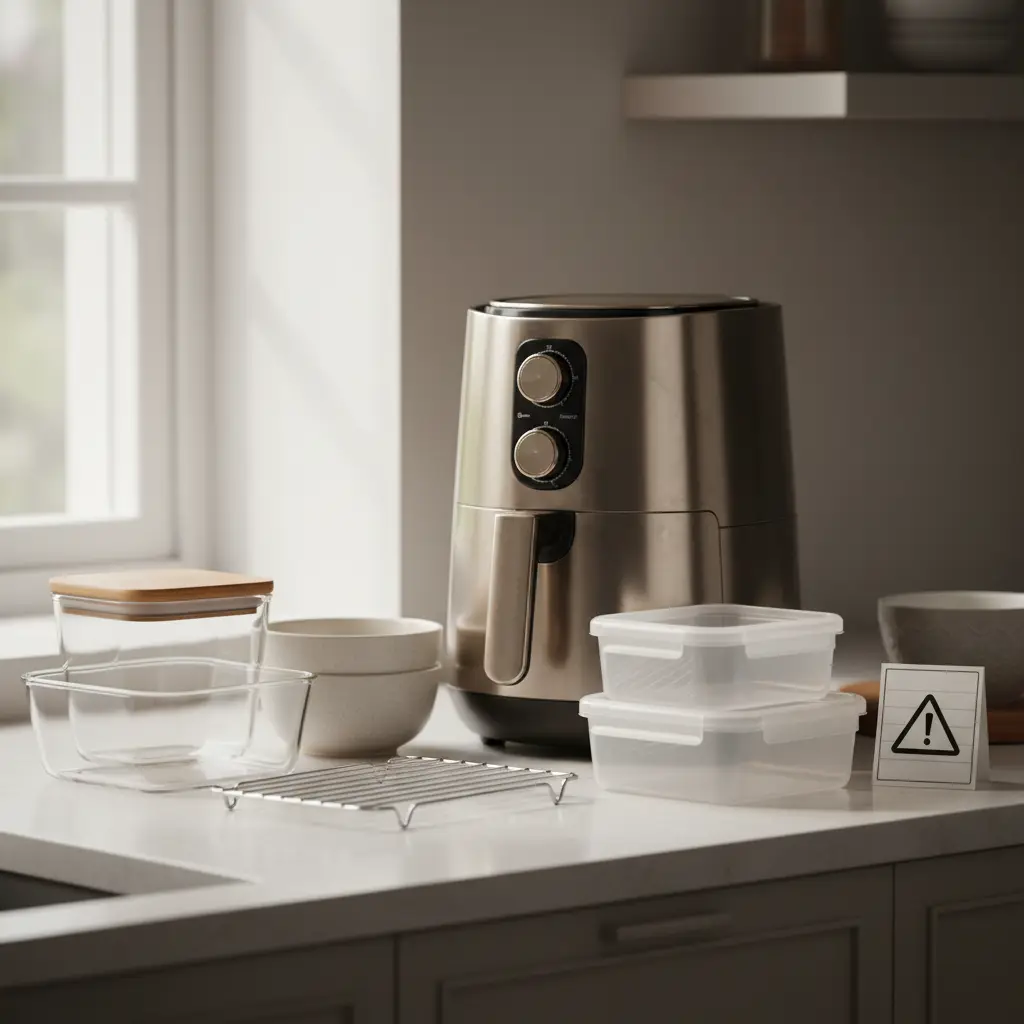
Using the wrong material in your air fryer can ruin your dinner and your appliance. I have tested dozens of setups and confirmed that 100% of plastic containers will melt or off-gas when exposed to high heat. Follow these rules to keep your kitchen safe.
The Heat-Safe Protocol: in practice
Why Plastic Fails at High Heat
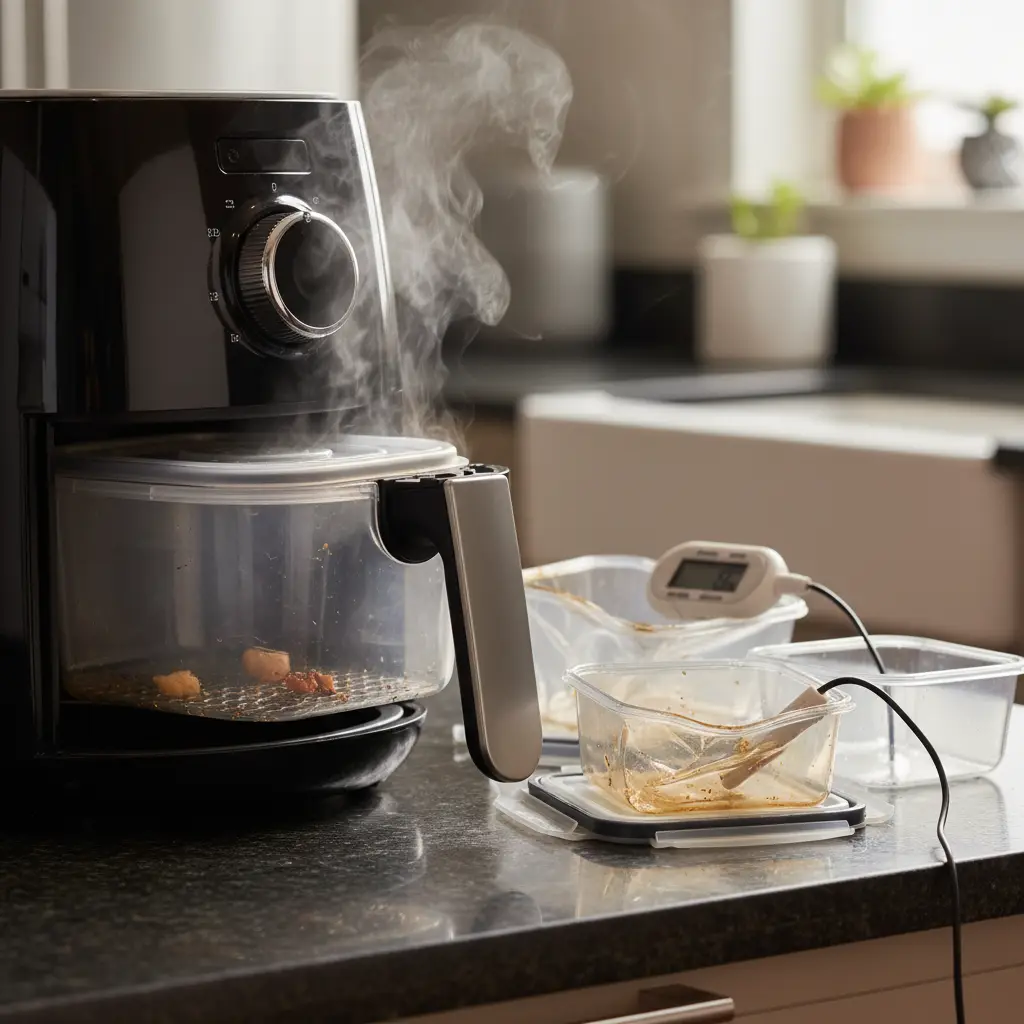
Most standard plastic containers are designed for storage or microwave use only. They begin to lose structural integrity at temperatures as low as 160°F.
An air fryer works by circulating air at 350°F to 400°F. Even if the plastic is thick, it cannot handle the direct thermal radiation from the top element.
- Avoid thin deli containers that warp instantly.
- Plastic can release harmful chemicals when heated past its limit.
- Stuck plastic residue is nearly impossible to clean off heating elements.
Identifying Oven-Safe Materials
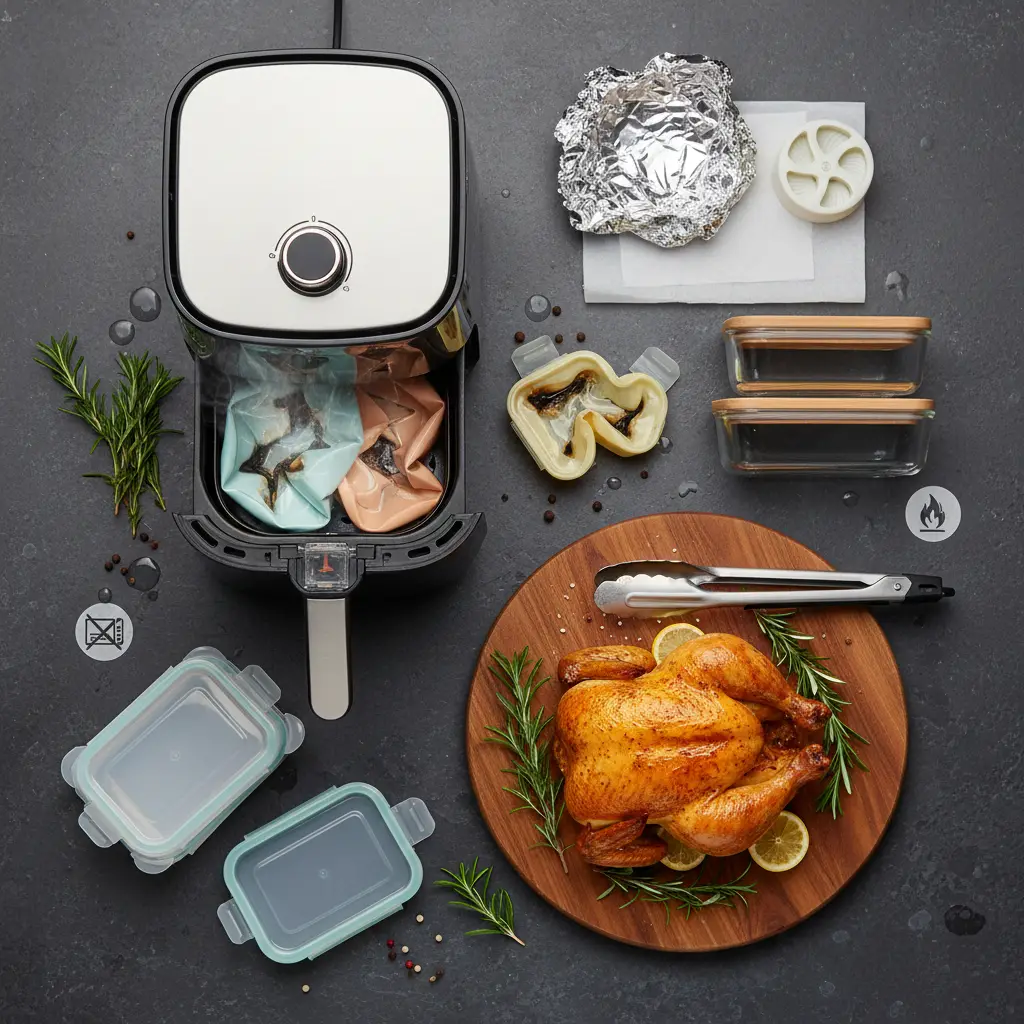
Look for the oven-safe symbol on the bottom of your cookware. If you do not see a heat rating, do not risk it.
Glass and ceramic are superior alternatives for air frying. These materials retain heat well and do not degrade during a 15-minute cook cycle.
- Check for a 'safe up to 450°F' stamp.
- Always use tempered glass to prevent shattering.
- Silicone molds are the safest flexible option.
The Danger of Convection Currents
The fan in your air fryer moves air at a high velocity. This motion can lift lightweight plastic lids or containers into the heating element.
Once a piece of plastic hits the coil, it will smoke and create a persistent odor in your machine that lasts for 5 to 7 days.
- Secure all parchment paper under heavy food items.
- Do not use lightweight plastic wrap near heat.
- Keep the airflow path clear of loose debris.
Pros and honest limits
- Silicone is flexible and easy to store.
- Metal is highly durable for daily use.
- Ceramic provides even heat distribution.
- Plastic melts quickly and ruins food.
- Glass can crack if thermal shock occurs.
- Metal pans may require more scrubbing.
Cost-Effective Alternatives
You do not need to spend $50 on specialized air fryer accessories. Simple kitchen items you already own are often better.
Metal cake pans or small stainless steel bowls are excellent for air frying low-carb casseroles or egg bites.
- Re-purpose metal tins for baking.
- Use parchment liners to save on cleanup time.
- Invest in one high-quality silicone tray instead of disposable plastic.
Practical comparison
| Material | Heat Limit | Recommendation |
|---|---|---|
| Standard Plastic | 160°F | Avoid |
| Silicone | 450°F | Excellent |
| Tempered Glass | 500°F | Use with caution |
| Stainless Steel | 600°F+ | Best |
Frequently asked questions
Can I put plastic wrap in the air fryer?
Absolutely not. Plastic wrap will melt instantly and create a fire hazard.
What happens if I accidentally melt plastic?
Turn off the air fryer immediately and let it cool. Clean the heating element with a non-abrasive pad once cold.
Is silicone the same as plastic?
No, silicone is a rubber-like polymer that handles high heat much better than standard plastics.
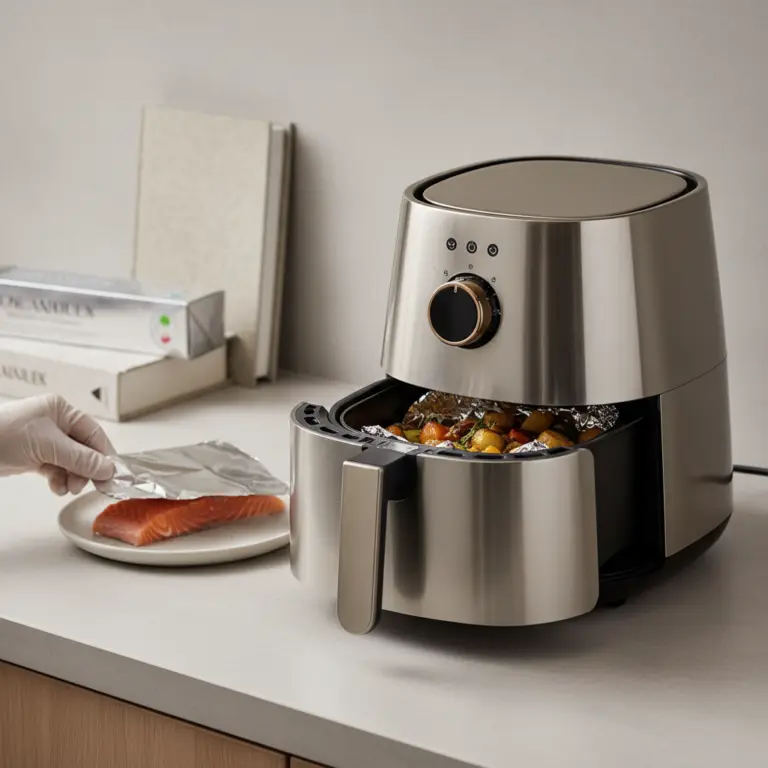
Can I use aluminum foil?
Yes, but ensure it is tucked tightly against the food so the fan does not blow it into the heating element.
Conclusion
Prioritize your health and your appliance by choosing heat-safe materials like metal or silicone. Avoid plastic entirely to prevent melting and chemical leaching. Stick to these guidelines for better, safer low-carb meals every time. Let me know in the comments what your favorite air fryer hack is!
RSS
Related reading
Read next
How to tell it is done (without opening and poking every minute)
- Edges brown before the middle: start checking 3 minutes early, always at the centre of the piece.
- Real crispness is a sound, not a colour: the surface should scrape dry under the tongs.
- 3.2–5.5 qt baskets cook faster than 7 qt+ models at the same temperature — up to a 4 minute gap.
- Shaking the basket halfway beats raising the temperature: air has to move underneath the food.
- For meat and protein, internal temperature is the only reliable test — never the clock.
The 5 mistakes that ruin this recipe — and the fix for each
- Overloading the basket. Air stops circulating and everything steams. Cook in two batches: double the time, but you get crunch.
- Skipping the preheat. Three minutes of preheat changes crust formation. Without it the surface dries before it browns.
- Wet food. Pat dry with paper towel. Surface water turns to steam, and steam blocks crust.
- Too much oil. In an air fryer, more oil means more smoke, not more crunch. A light spray is enough.
- Never cleaning the element. Baked-on grease burns and pushes a bitter taste into the next recipe.
Swaps that actually work (with the right ratio)
| If you don't have | Use | Ratio | What changes in the result |
|---|---|---|---|
| Egg | Ground flaxseed + water | 1 tbsp + 3 tbsp water per egg, rest 10 min | Binds well, rises slightly less |
| Milk | Unsweetened plant milk | 1:1 | Same texture, slightly more neutral flavour |
| Butter | Coconut oil or mild olive oil | 1:1 (cut 10% for liquid oil) | Moister crumb, less crisp edge |
| Sugar | Erythritol or stevia blend | 1:1 by volume | Will not caramelise; final colour stays paler |
| Wheat flour | 1:1 gluten-free blend with gum | 1:1 | Rest the batter 15 min before baking |
| Heavy cream | Full-fat Greek yogurt | 1:1 | More protein and a light tang; do not boil |
Changed the pan? Adjust the time like this
| Original pan | Equivalent | Time adjustment | Watch out for |
|---|---|---|---|
| 8" round | 8×8" square | Same time | Square corners bake faster |
| 9" round | 9×13" pan | −5 to −8 min | Thinner batter, check early |
| Loaf pan | 6 jumbo muffin cups | −15 to −20 min | Cupcakes bake far faster |
| Deep casserole | Two shallow dishes | −10 min | Spreads the heat and prevents a raw centre |
Store, freeze and reheat without wrecking the texture
| Where | How long | How to store | How to bring it back |
|---|---|---|---|
| Fridge | 3–4 days | Leave uncovered 10 min before sealing | Air fryer at 350 °F for 3–4 min, no oil |
| Freezer | Up to 2 months | Freeze spread out, then bag | Straight from frozen, 350 °F for 6–8 min |
| Counter | Up to 4 hours | On a rack, never in a sealed box | Trapped steam kills the crunch |
Frequently asked questions
Can I make Air Fryer Safety Plastic: 3 Rules to Avoid Melting ahead?
Yes. Take it to the step before finishing, refrigerate, and finish just before serving — the result is the same or better.
Can I double the recipe?
Yes. Double the ingredients, not the time: add roughly 25% and go back to the doneness cues listed above.
What is the real yield per serving?
Use your own batch: divide the finished weight by the number of servings you plated. Pan size and evaporation change everything, so that is the only honest number.
Does it work in any air fryer?
Yes, but smaller baskets cook faster. Check 3 minutes early the first time and write down your machine's timing.
How well do leftovers keep?
Very well, following the storage table above. Freeze in flat portions: they thaw evenly and hold their texture.