Air Fryer Safety: 5 Rules to Follow for Perfect Results
Master air fryer safety to prevent kitchen accidents while keeping your low-carb meals crispy. By following these 5 simple habits, you will save 100% of your dinner from burnt edges and avoid fire hazards every time you cook.
The 5-Point Check: in practice
Placement and Ventilation
Your air fryer acts like a convection oven, meaning it needs to push out hot air. Blocking the vents causes the unit to overheat rapidly.
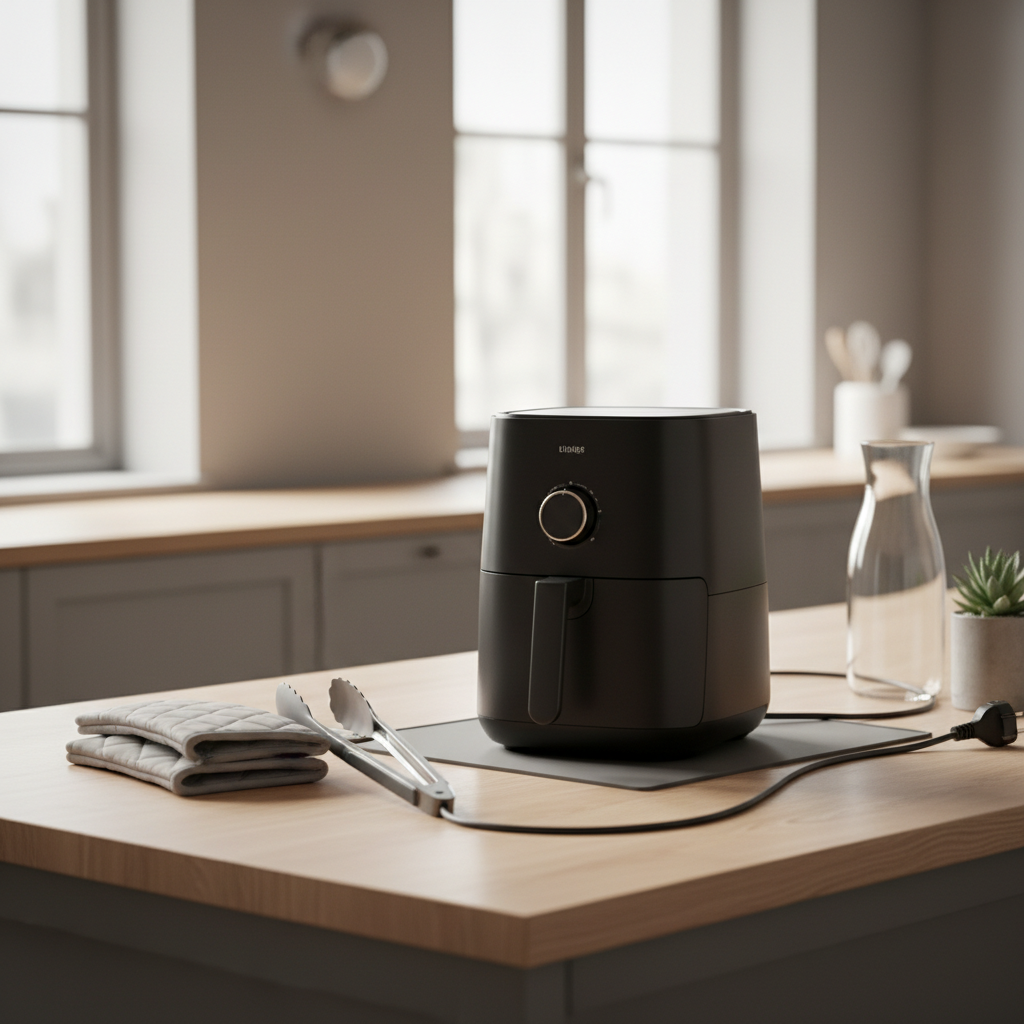
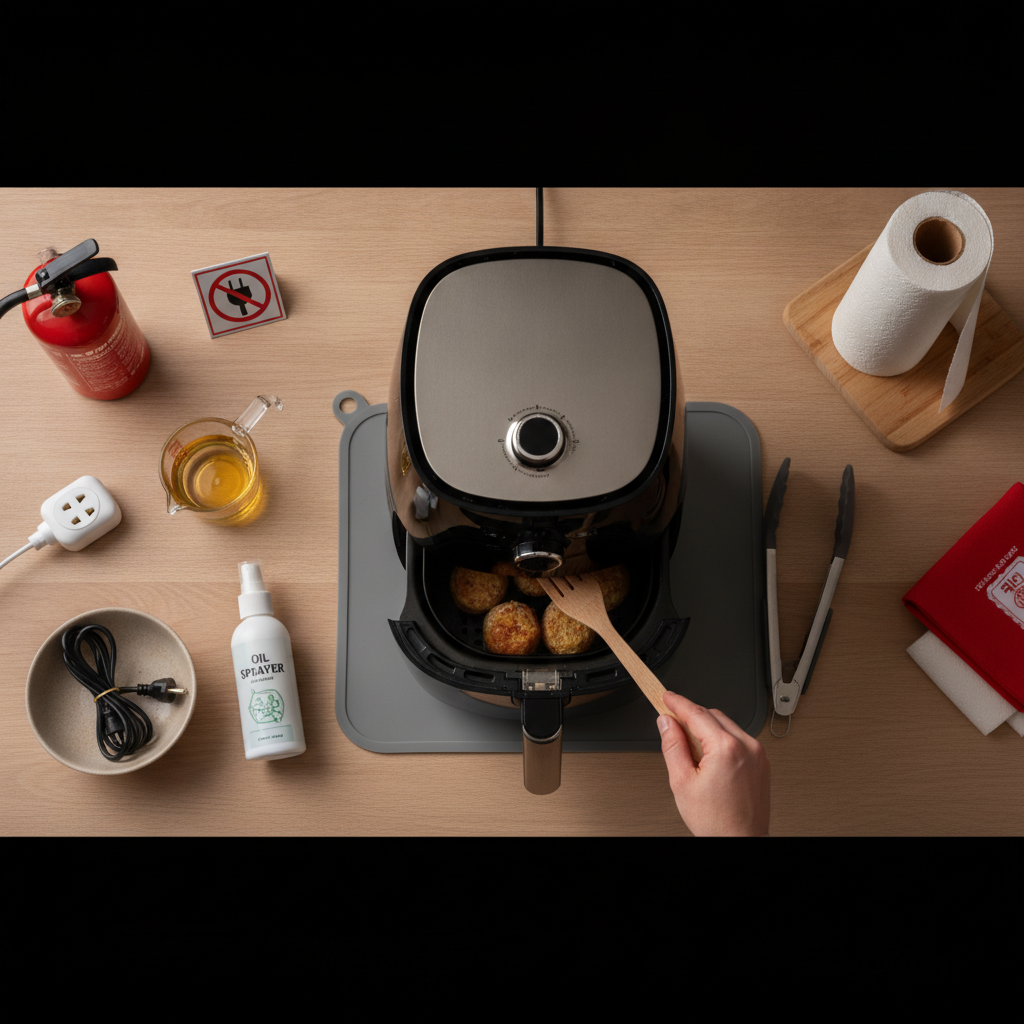
Always place the machine on a heat-resistant surface like granite or a silicone mat. Avoid placing it under low-hanging cabinets to prevent heat damage.
- Keep at least 5 inches of space behind the unit.
- Check for debris near the air intake vents before starting.
- Avoid using extension cords to prevent electrical strain.
Managing Fat and Drippings
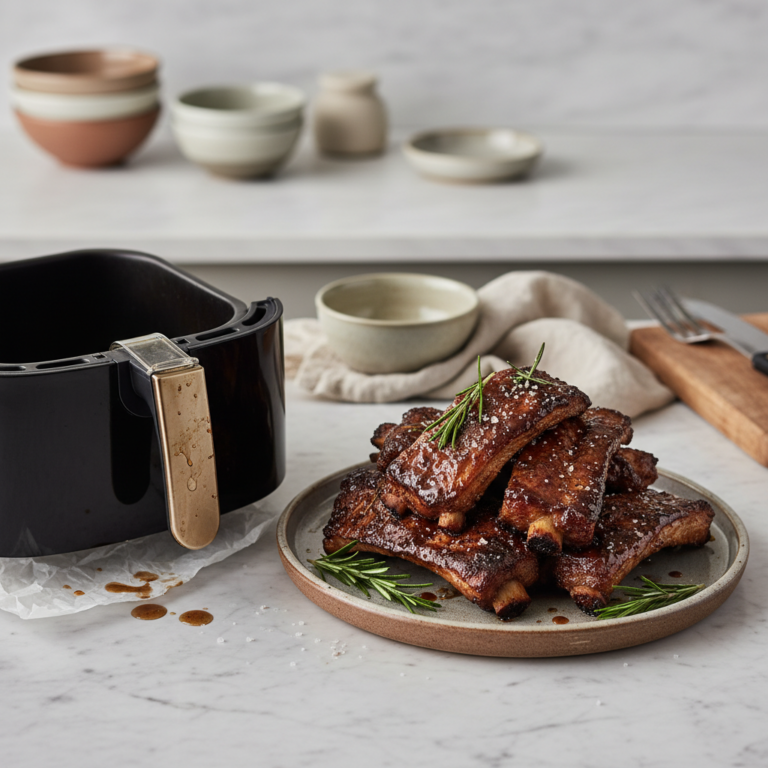
Low-carb cooking often involves fatty proteins like bacon or chicken thighs. Excess grease can pool at the bottom and create smoke or fire hazards.
Empty the drawer of grease every 2 to 3 uses. This simple step keeps your kitchen smelling fresh and prevents flare-ups.
- Add 2 tbsp of water to the bottom tray to catch grease.
- Pat proteins dry with a paper towel before seasoning.
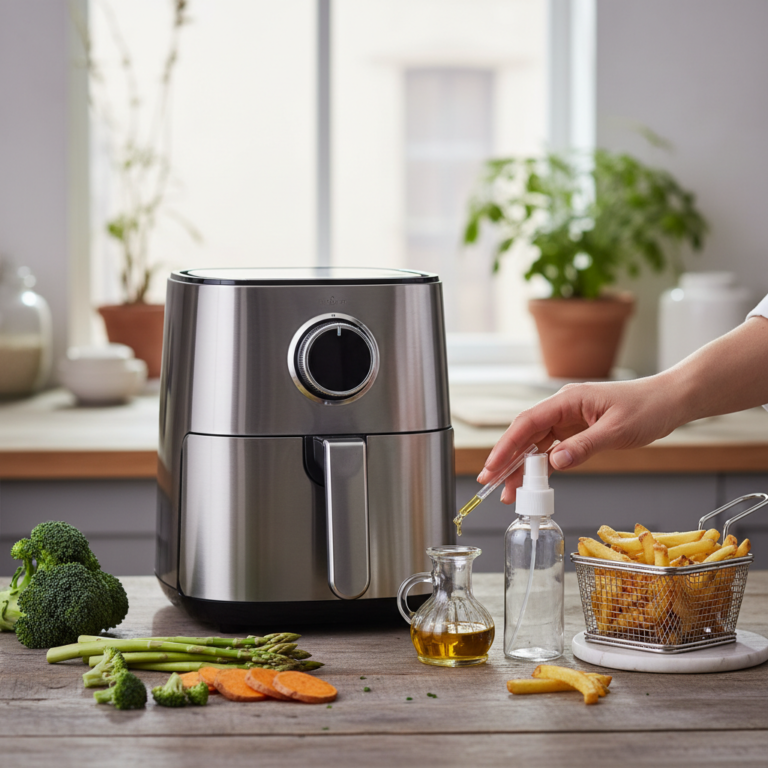
- Avoid aerosol sprays which contain propellants that damage coatings.
Avoiding Overcrowding
Crowding the basket is the most common reason for uneven cooking. If the food touches, it steams instead of crisps.
Work in batches if you are cooking more than 1 lb of food at a time. Your patience results in a much better crunch.
- Leave at least 0.5 inches between food items.
- Shake the basket halfway through the cook time.
- Use a rack to lift food for better airflow.
Pros and honest limits
- Faster than conventional ovens
- Healthier than deep frying
- Low-carb friendly cooking
- Small capacity for large families
- Requires frequent cleaning
- Risk of smoking with high fat foods
Cleaning and Maintenance
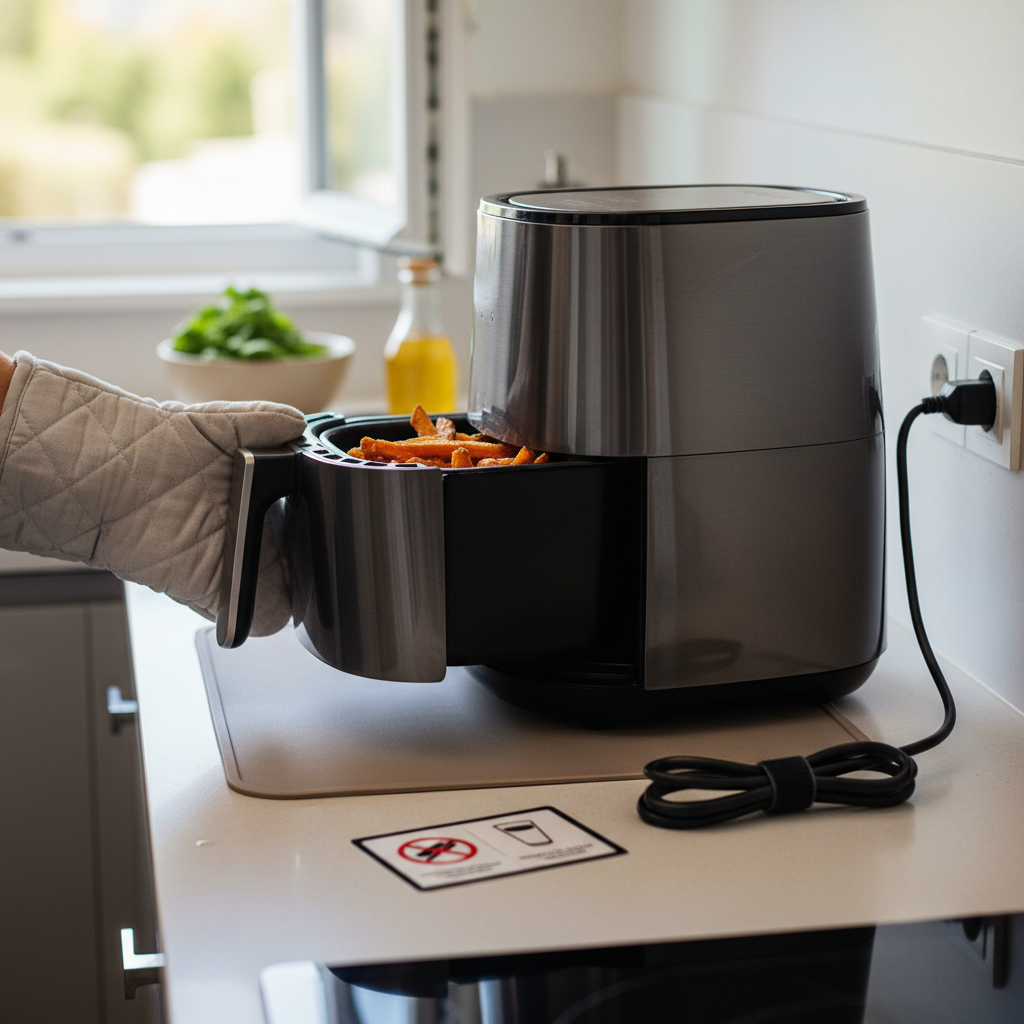
Clean your air fryer basket with mild soap and a soft sponge. Hard scrubbing removes the non-stick coating, which can release fumes if damaged.
Wait for the unit to feel cool to the touch before washing. Sudden temperature changes can warp the basket.
- Never submerge the main electrical unit in water.
- Check the heating element for stuck food after every 5 uses.
- Use a wooden or silicone tool to avoid scratching the surface.
Practical comparison
| Component | Safety Risk | Maintenance |
|---|---|---|
| Heating Element | Fire Hazard | Clean monthly |
| Air Vents | Overheating | Clear weekly |
| Basket Coating | Toxic Fumes | Hand wash only |
| Grease Tray | Smoke/Fire | Empty daily |
Frequently asked questions
Can I put foil in the air fryer?
Yes, you can use foil, but keep it weighed down by food. If it blows into the heating element, it can cause a short circuit.
Why does my air fryer smell like plastic?
New units often have residue from manufacturing. Run it empty at 400°F for 10 minutes before your first real meal.
Is it safe to leave the air fryer plugged in?
It is best to unplug it after use. This prevents accidental activation by pets or children.
Conclusion
Practicing these basic air fryer safety habits ensures your kitchen remains a stress-free zone for meal prep. Keep your vents clear and your basket clean for the best results. Ready to crisp up your next low-carb dinner? Try my favorite recipe below.